
In recent years, distributed acoustic sensing (DAS) has experienced a rapid surge in popularity within the geophysics community by turning fiber optic cables into dense arrays of seismic sensors. Most commonly, DAS experiments are carried out near existing infrastructure because the systems require a significant and continuous supply of electrical power. However, these heavy power needs are one of the multiple factors limiting the widespread deployment of DAS.
To help facilitate wider adoption of DAS technology, the Common Sensor Platform (CSP) team has been developing an all-in-one power and enclosure system so that DAS can be deployed in more remote areas independent of local power infrastructure.
As part of its implementation phase, the CSP team completed construction of a prototype of the DAS power system and its enclosure this past year. The prototype will be thoroughly tested this year to evaluate the system’s power output, characterize internal temperature fluctuations, and analyze vibration impacts.


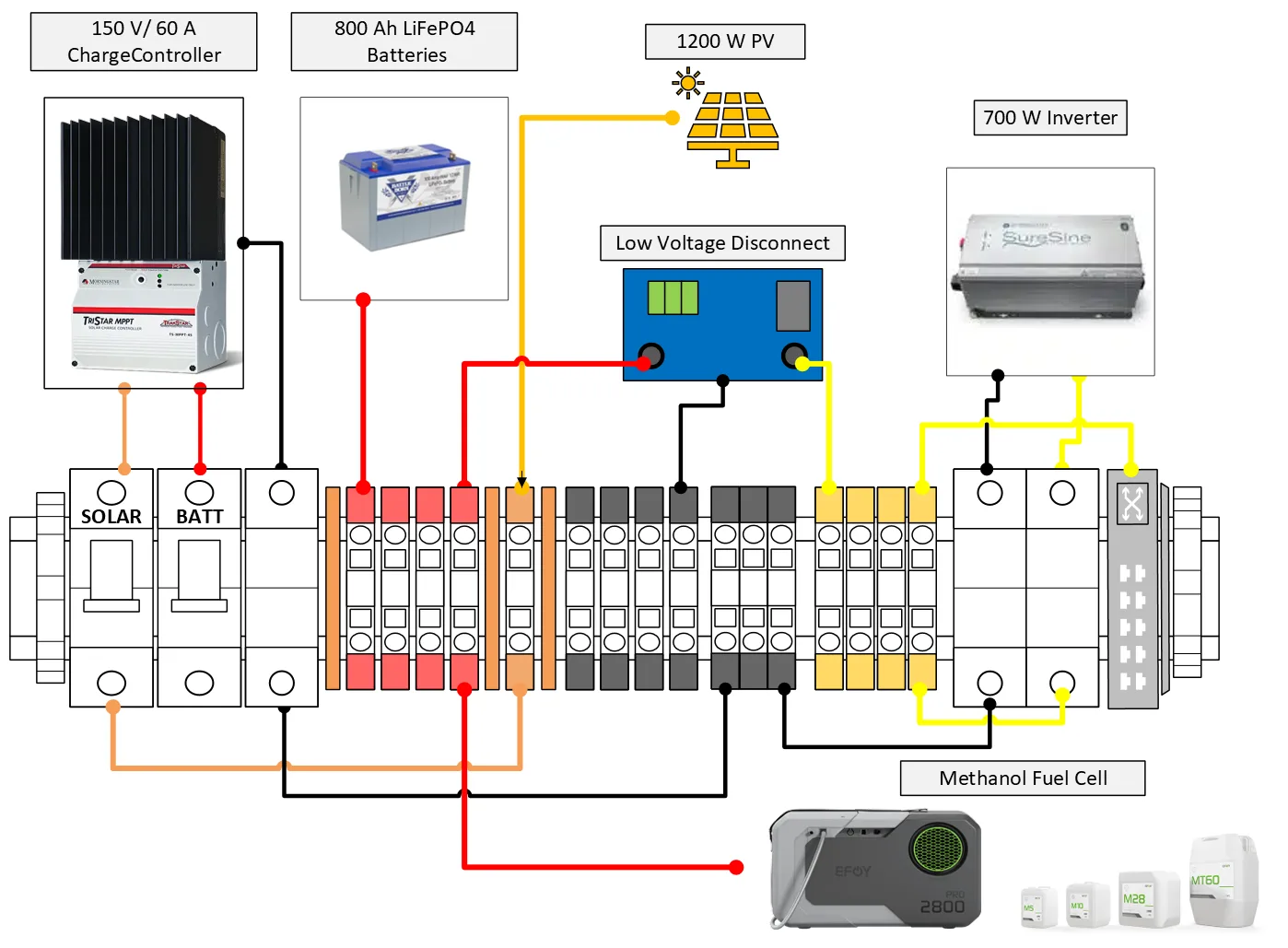
All components—including the DAS interrogator—fit within a 4’ x 4’ enclosure box, allowing for the system to be brought in on a trailer or helicopter for experiments. The portable power system is capable of continuously supplying 500W and is powered by a combination of solar panels, batteries, a fuel cell, and an inverter. In keeping with the scalable nature of CSP designs, a low power version of the enclosure box powering a 40W unit is in the works for development this year.


The CSP team’s continued work testing the DAS power system will help inform future iterations of its modular and scalable design, working to expand opportunities to deploy DAS in remote environments.